Image Encryption and Decryption Online
This tool encrypts and decrypts any image instantly for free. It supports encryption of all image formats such as .png, .jpeg, .jpg, .gif, .bmp, .webp, etc. ⓘ Encryption tools
This image can be encrypted with a user supplied secret key or without it, but it is always recommended to supply a custom secret key while encrypting the image for utmost security.
Also, you can use this text encryption and decryption tool to encrypt any text instead of an image.
🔒 Encrypt Image
Choose image (Max 10MB)
✓ Encryption Successful!
🔓 Decrypt Image
Encrypted file (.enc / .txt) or paste Base64
OR
✓ Decryption Successful!
🛡 Features
AES Encryption
Military-grade AES-256 encryption to secure your images
All Formats Supported
PNG, JPEG, GIF, BMP, WebP, and more image formats
Password Protection
Optional passkey for additional security layer
Client-Side Processing
All processing happens in your browser - nothing uploaded to servers
Multiple Output Formats
Export as .enc file or copy Base64/Hex string
Fast & Free
Instant encryption/decryption with no file size limits for small images
How Image Encryption Works
Image encryption converts your image data into an unreadable format using the AES (Advanced Encryption Standard) algorithm. When you encrypt an image with this tool:
- The image is read as binary data (the "Plain text" in the diagram below)
- A cryptographic key is generated or derived from your passkey (the "Secret key" - supporting 128, 192, or 256-bit lengths)
- The AES cipher encrypts the image data block by block
- The encrypted output ("Cipher text") is encoded as Base64 or Hex for easy storage/sharing
AES Encryption Process for Images
The diagram below illustrates how AES encryption works. Your image binary data serves as the Plain text input, combined with your Secret key (passkey). The AES Cipher processes this through multiple rounds of substitution and permutation to produce the encrypted Cipher text - which is your protected image data.
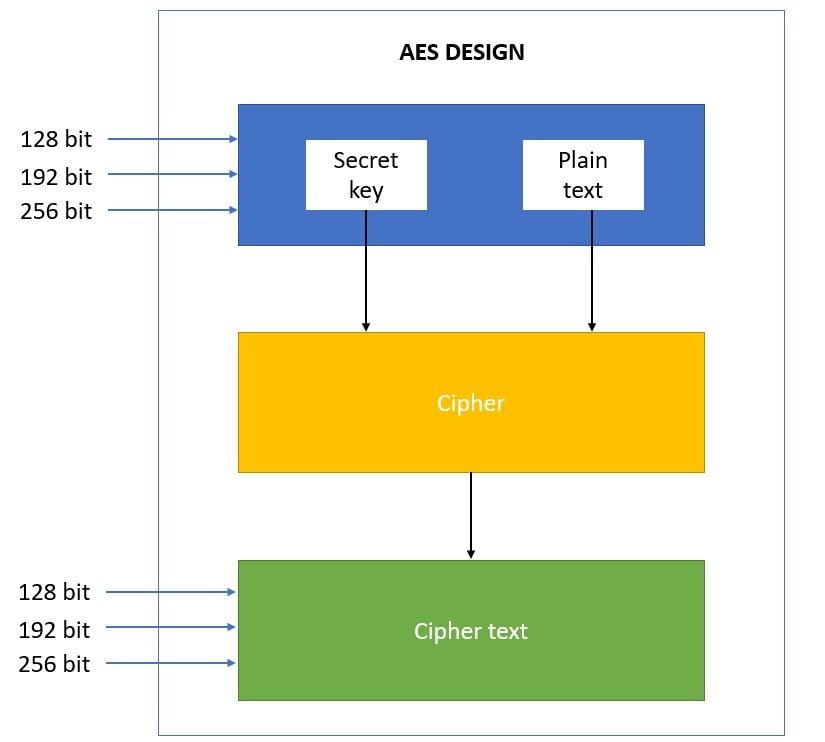
To decrypt, the same secret key must be used, and the process is reversed to recover the original image. The key size (128, 192, or 256 bit) determines the strength of encryption - this tool uses AES-256 by default for maximum security.
Why Encrypt Images?
- Privacy Protection: Keep personal photos secure from unauthorized access
- Secure Sharing: Share sensitive images safely over unsecured channels
- Data Protection: Protect confidential documents and screenshots
- Cloud Storage Security: Encrypt images before uploading to cloud services